Learning Outcomes-
•Research and creative curiosity
•Process, Experimentation, and criritical analysis
•Communication and audience
•Realisation
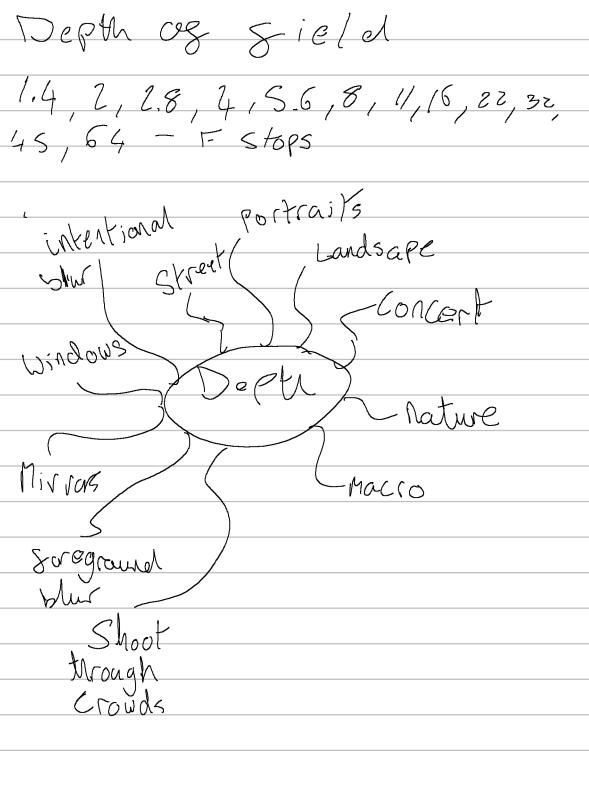
Researching others work
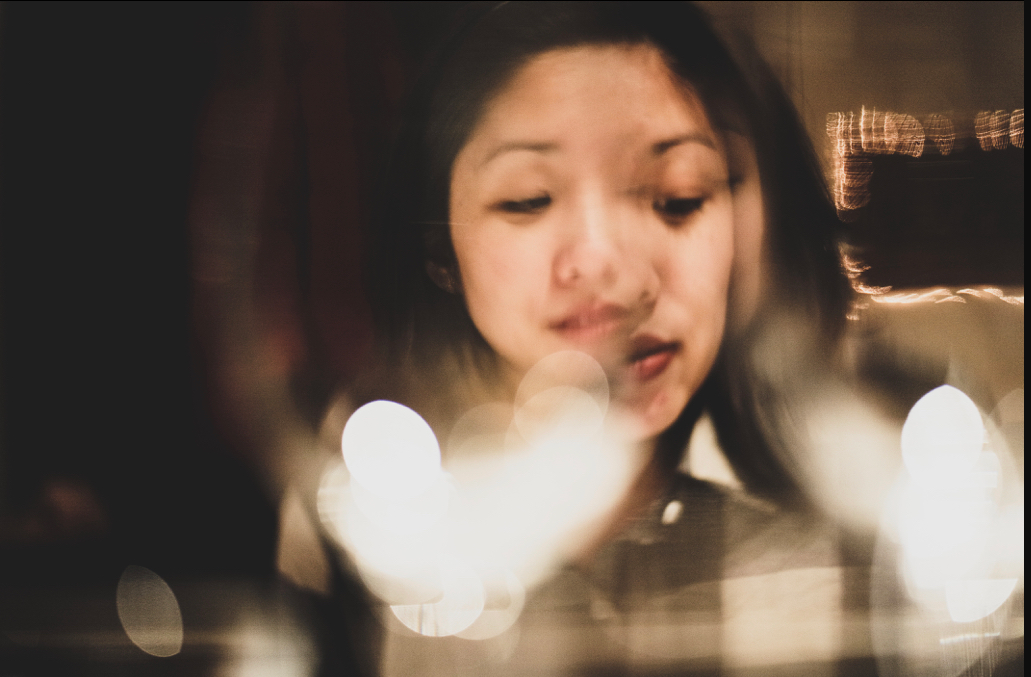
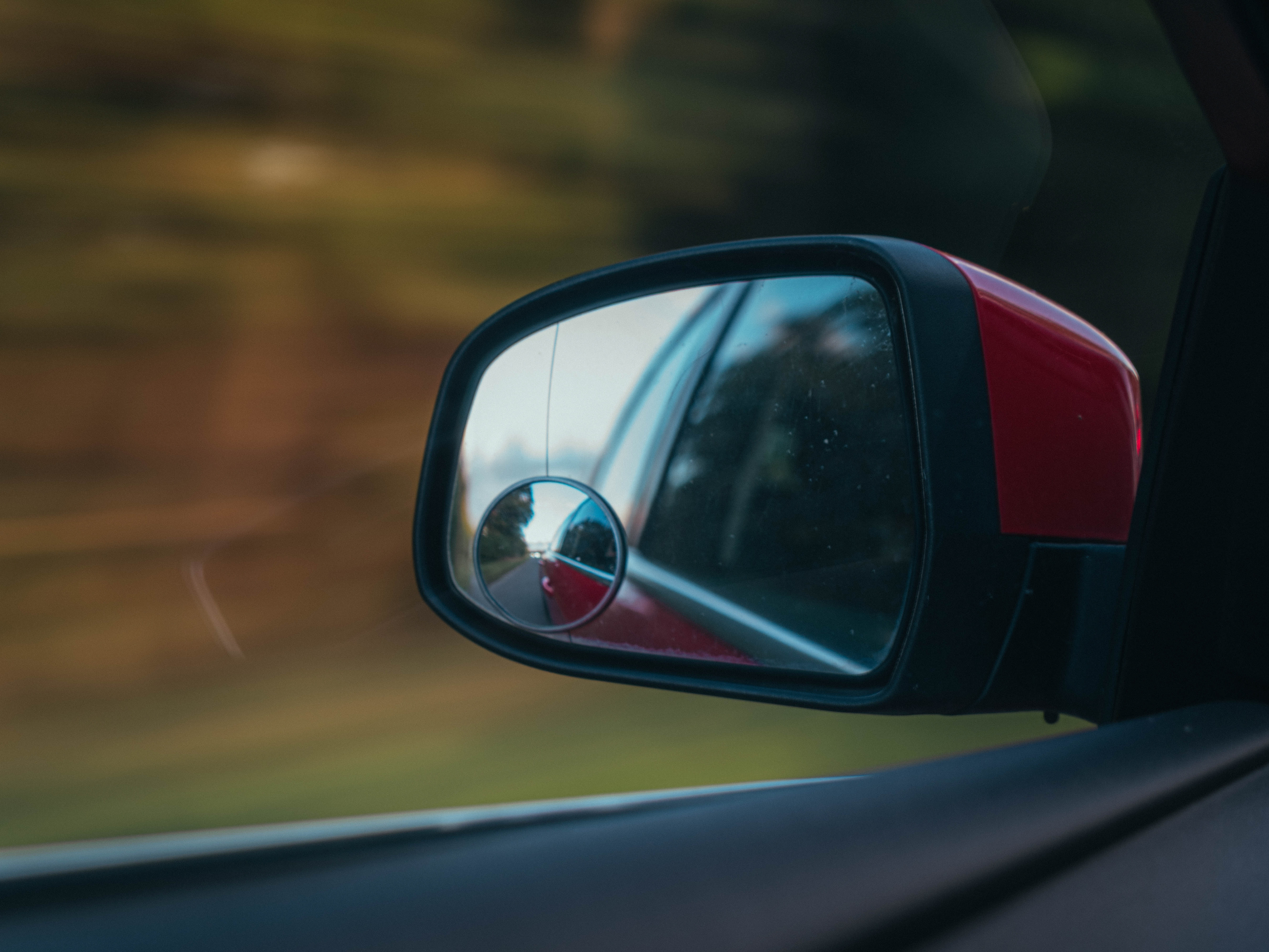
this image uses depth to create foreground bokeh and makes use of mirrors with depth to distort the image.

this photo uses a macro lens with maybe around f5.6 to make the front of the insect in focus but drop out its body and any background information.
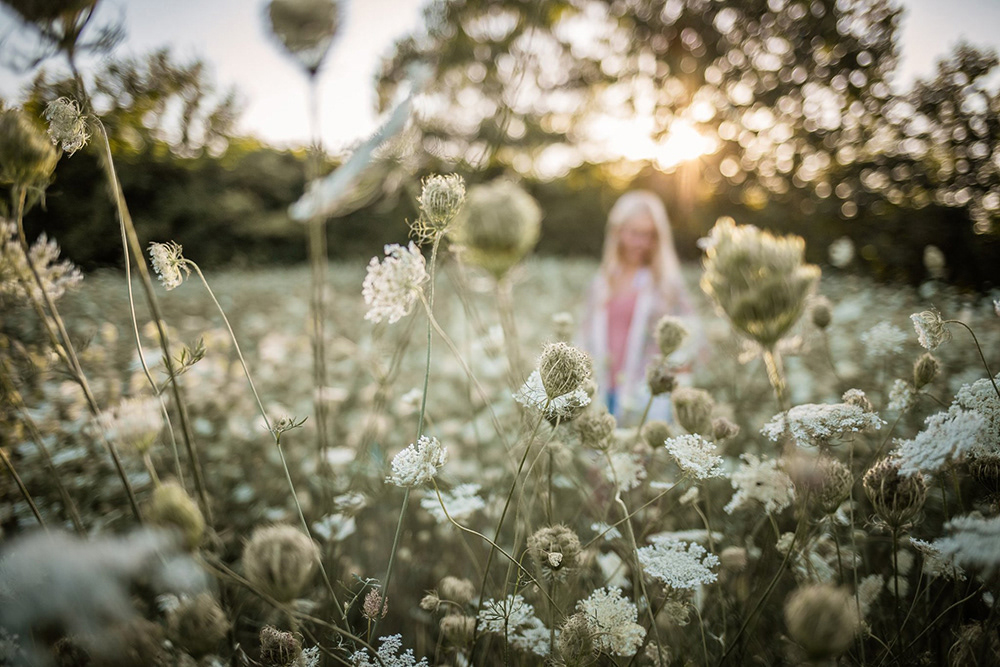
this image uses depth to focus on the foreground flowers whilst showing the subject in the background as a subject due to the colours but not showing the face, the sunset also comes through as bokeh behind her.
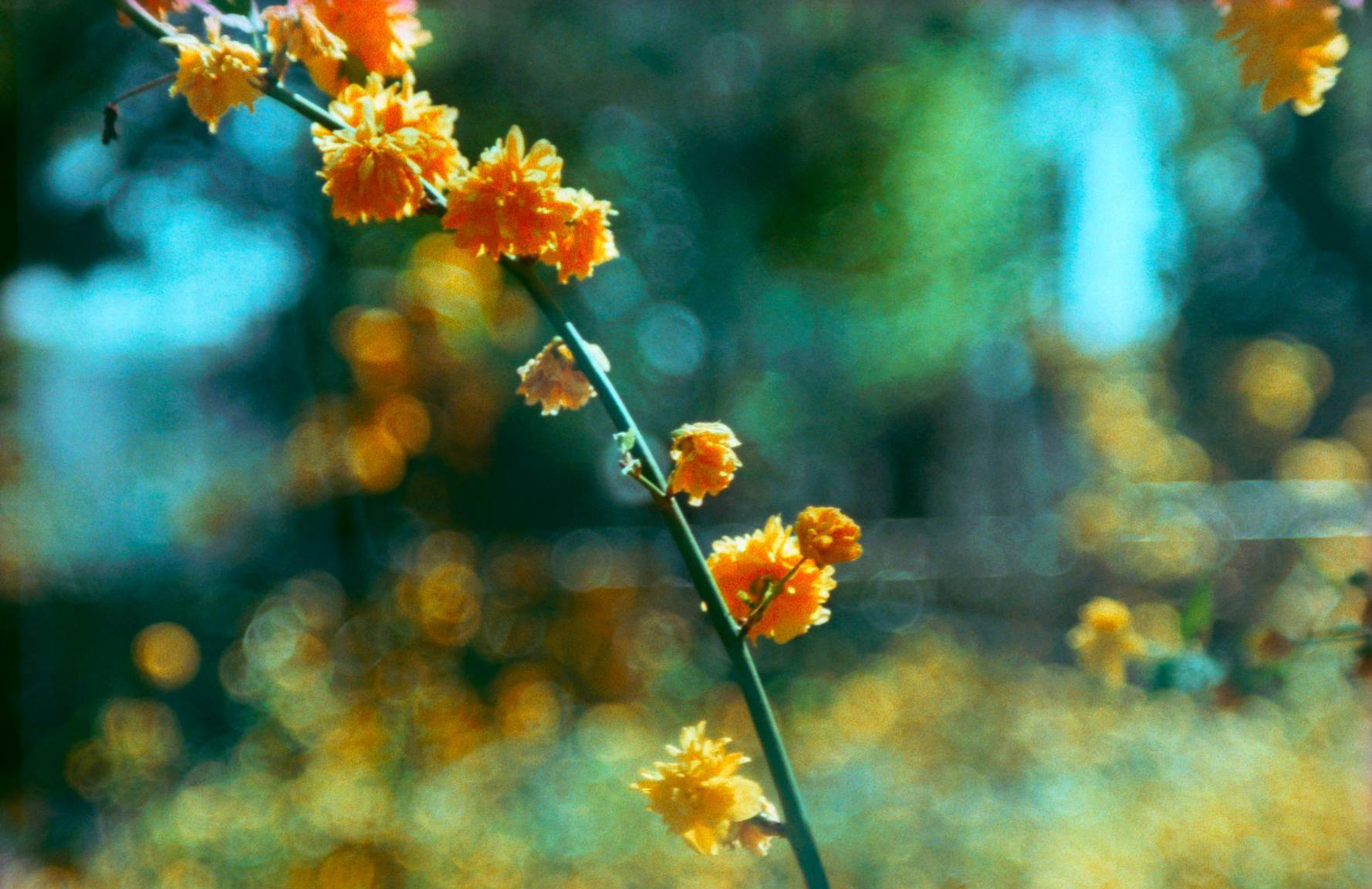
this photo uses depth to focus on the subject and drop everything in the background into bokeh so you cannot interpret any background information.
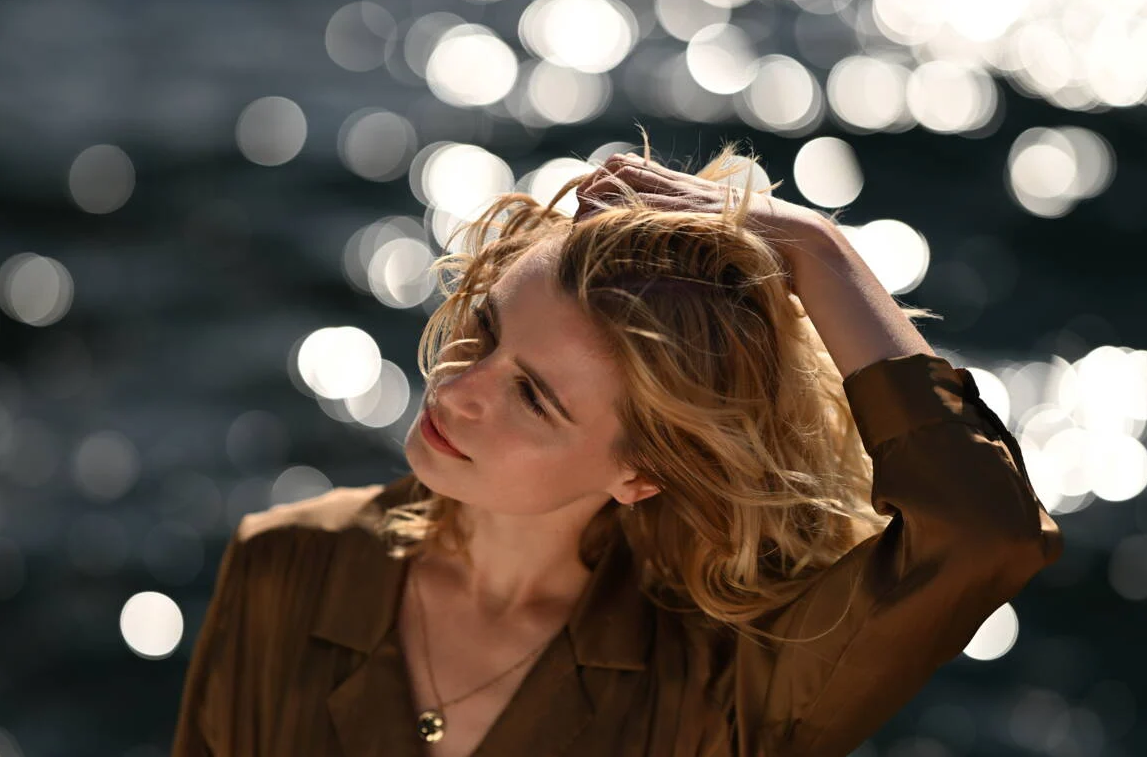
this photo uses depth to make the subject in perfect focus whilst creating purely bokeh in the background for a pleasing aethstetic.
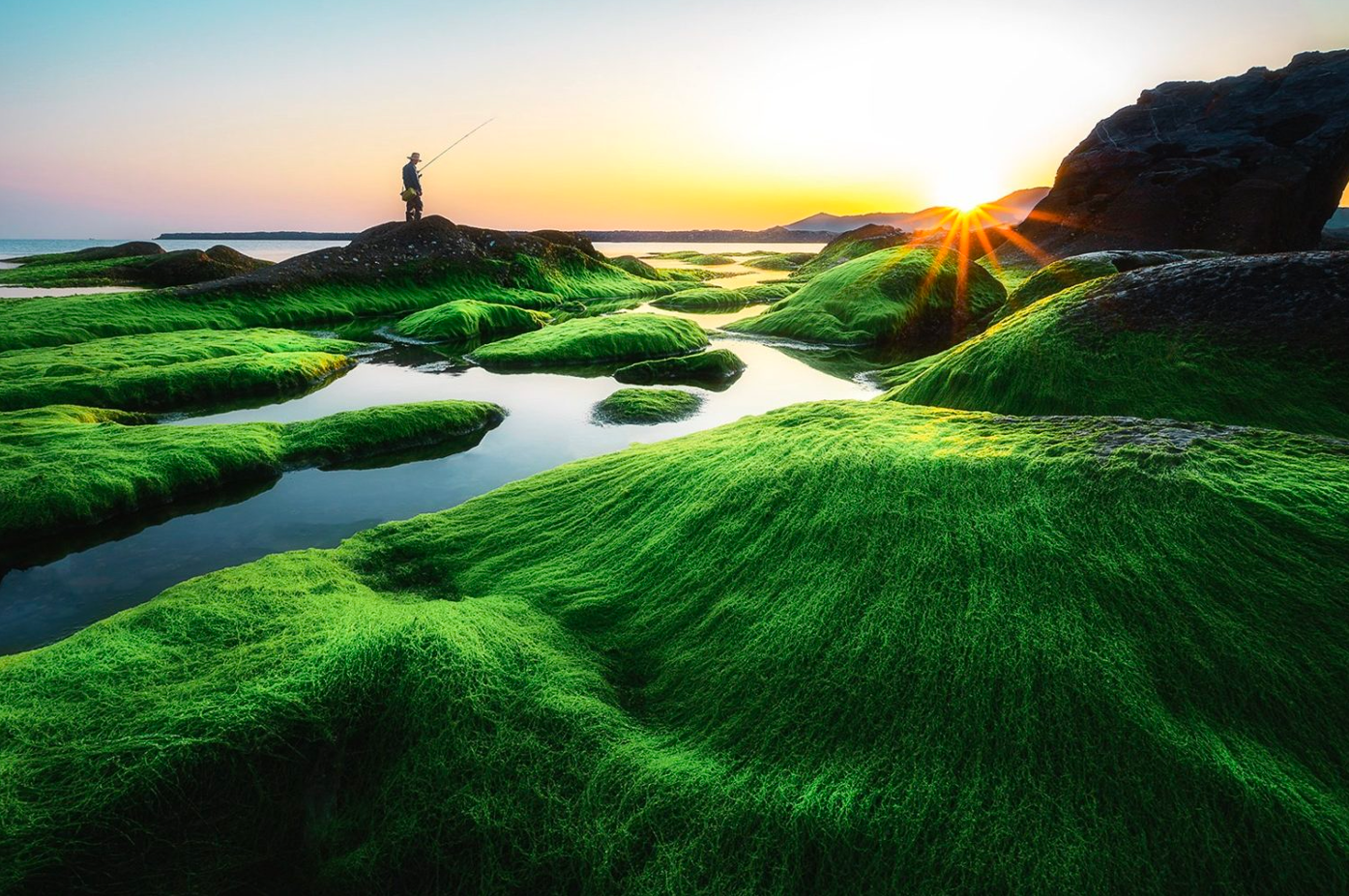
this photo uses a wide aperture to make sure everything in the frame is in focus which ensures the viewer can see detail and information in all parts.
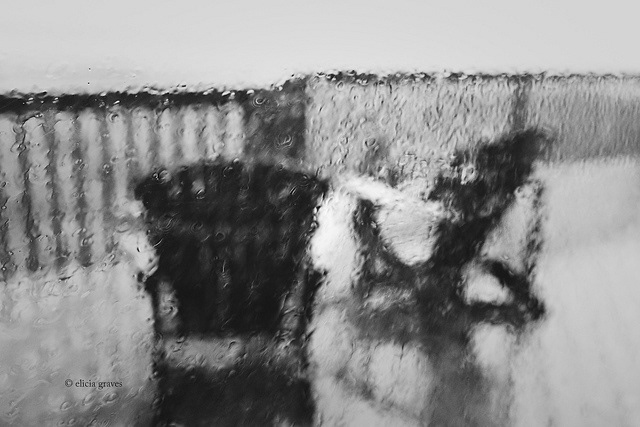
This image shows the camera looking through a window at 2 chairs on a rainy day in black and white. The use of depth in this image is used to create an atmosphere in the photo. the camera is focused on the rain of the window, it shows there is a lot of rain and it has possibly been raining for some time. Looking past the focus we can see the 2 chairs out of focus facing toward a balcony which suggests that usually 2 people would sit together and look at the view but the weather is preventing this. The floor can be seen reflecting the chairs which shows it is very wet and the rain has either come down heavy or been persistent. the use of black and white makes this image have an air of sadness to it, like the photographer wishes they were out there and have tried to make it as clear as possible, by focusing on the rain and the black and white, that they are upset that they are not.
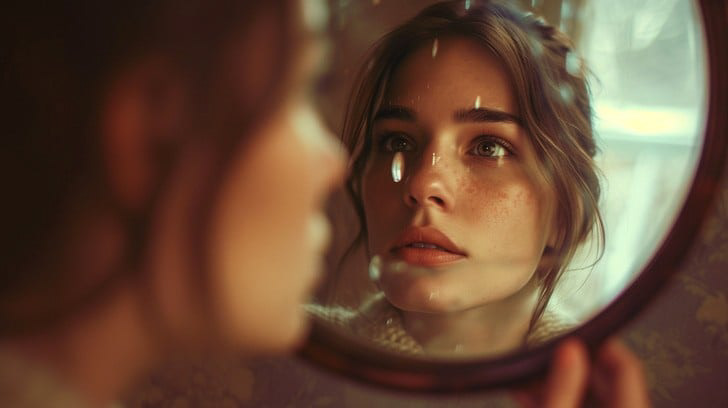
This image shows a portrait of a woman looking into a mirror. This photo uses depth by showing the face through the mirror and obscuring the true face on camera left. this is an over the shoulder type of shot but using the mirror to create a portrait. the mirror has some kind of marks on it which obscure parts of the subjects face and create an imperfect image and the largest mark could be interpreted as a tear from how it is placed directly under the subjects eye which could change the feeling of the image to something of longing. The use of depth and the mirror takes these marks to be slightly out of focus as well making it so they don't look like dirt or stains but instead bokeh which gives the image a clean feeling, the depth also obscures everything apart from the subjects face , including the background and the sides of the mirror. the idea of the photographer was very much to make you look at the subjects face. the mirror could explore this more as it takes away any background and gives the viewer two routes to the face, through her cheek and her reflection. her out of focus face could be a leading line to the mirror with her nose being said line, as it points and hits right where the reflection face starts. I think this image uses depth effectively to draw attention to the subject at a reasonable distance without bringing in distractions or getting too close to the subject.
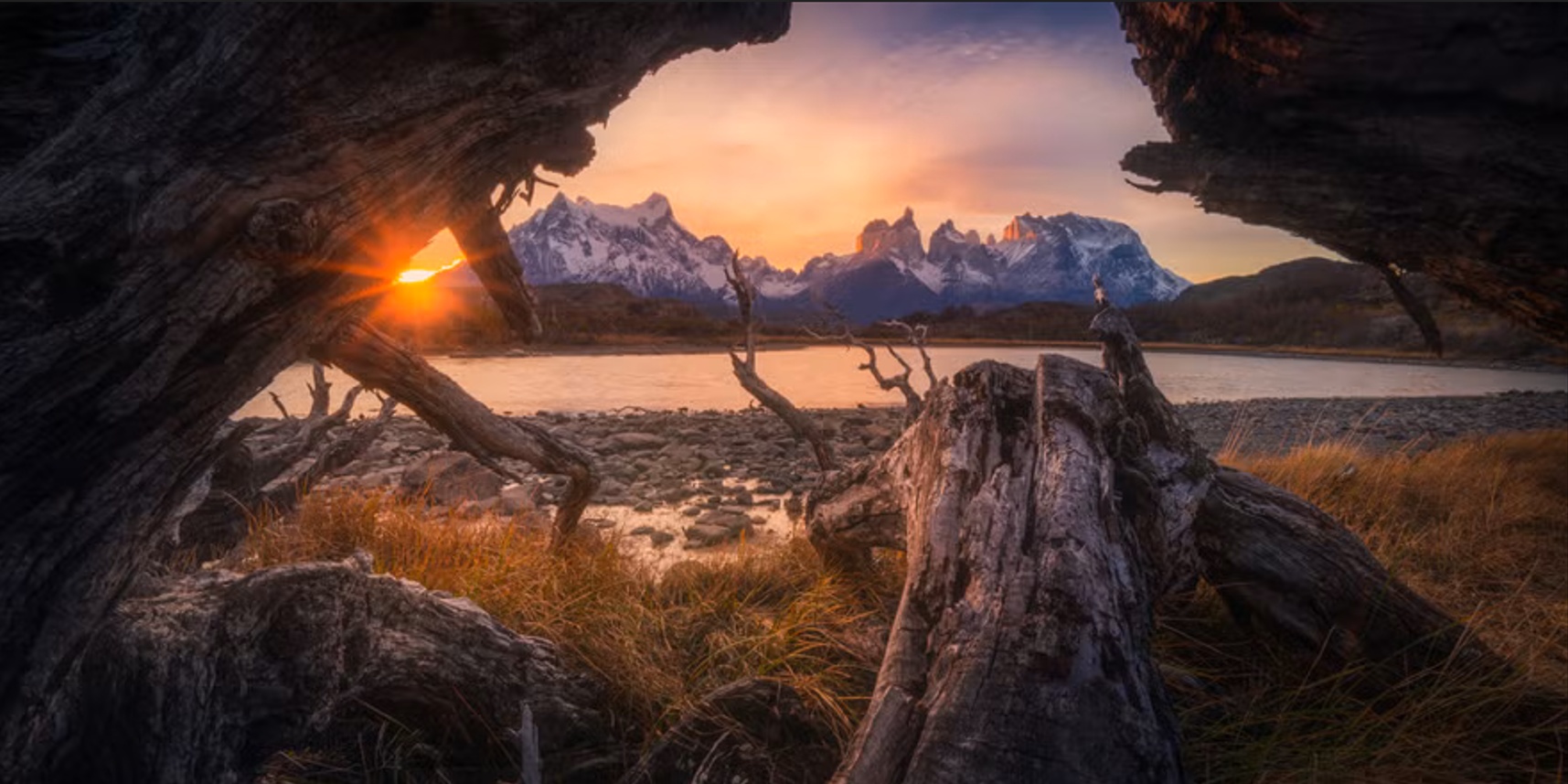
This image shows a landscape taken from within what looks to be a fallen tree, at the camera left corner the tree follows a diaganol pattern which allows a sunflare to come through from the sunrise and camera left blocks off a small amount to create an almost cave entrance look to the foreground of this image, the tree is also fallen forwards as we can see the trunk coming from centre middle of the camera into almost centre frame before it drops back down again and obscures itself. in the middleground we can see a lake and the background a mountain range. the use of depth in this image allows for everything to be in focus. with the tree in the foreground the viewer can see the gnurls and bark of the tree in full clarity as well as being able to see the mountains and where the snow has fallen and the form of the peaks. this shows it was taken at a very high aperture of f64 or around there. although looking at the rest of the image I could be wrong and this could be focus stacked as the blades of grass are all frozen in place and the ripples in the water can be seen suggesting a high shutter speed. this could be because it was bright but the setting sun does not lead us to believe this so I feel this image would have had HDR used to simulate the high depth effect rather than using high aperture but I have no way to confirm this. the way this image's depth is presented could lead the viewer to believe it was taken at a high aperture or made use of HDR.
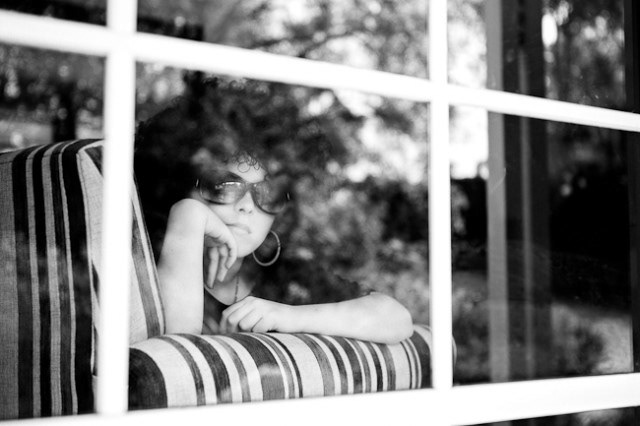
this image shows a woman looking longingly out of a window whilst laying on a sofa. the use of aperture in this image allows for the viewer to focus on the subjects face as the reflection of the window is bokeh, it creates the shape of a tree and allows the viewer to fill in the blanks of what she is looking at. this helps create a story within in the image as we can see the expression on the woman's face is a daydreamy kind and her hand position accentuates a longingness in this day dream but in general keeps a somewhat content and happy vibe to this image, almost in a better days are coming thought process. the lines in the window frame the woman's face and we can see a very wide aperture has been used as these are falling out of focus as to not create a distraction with any details that may be inside of them, such as chips, they create a square around her face with lines going all the way to the end of the frame to create a left to right viewing pattern, starting at the line- to the woman's face- to the bokeh of the tree to see what she is looking at. the use of aperture and depth allows for a clear subject whilst keeping most of the relevant information available to the viewer.
Final Images
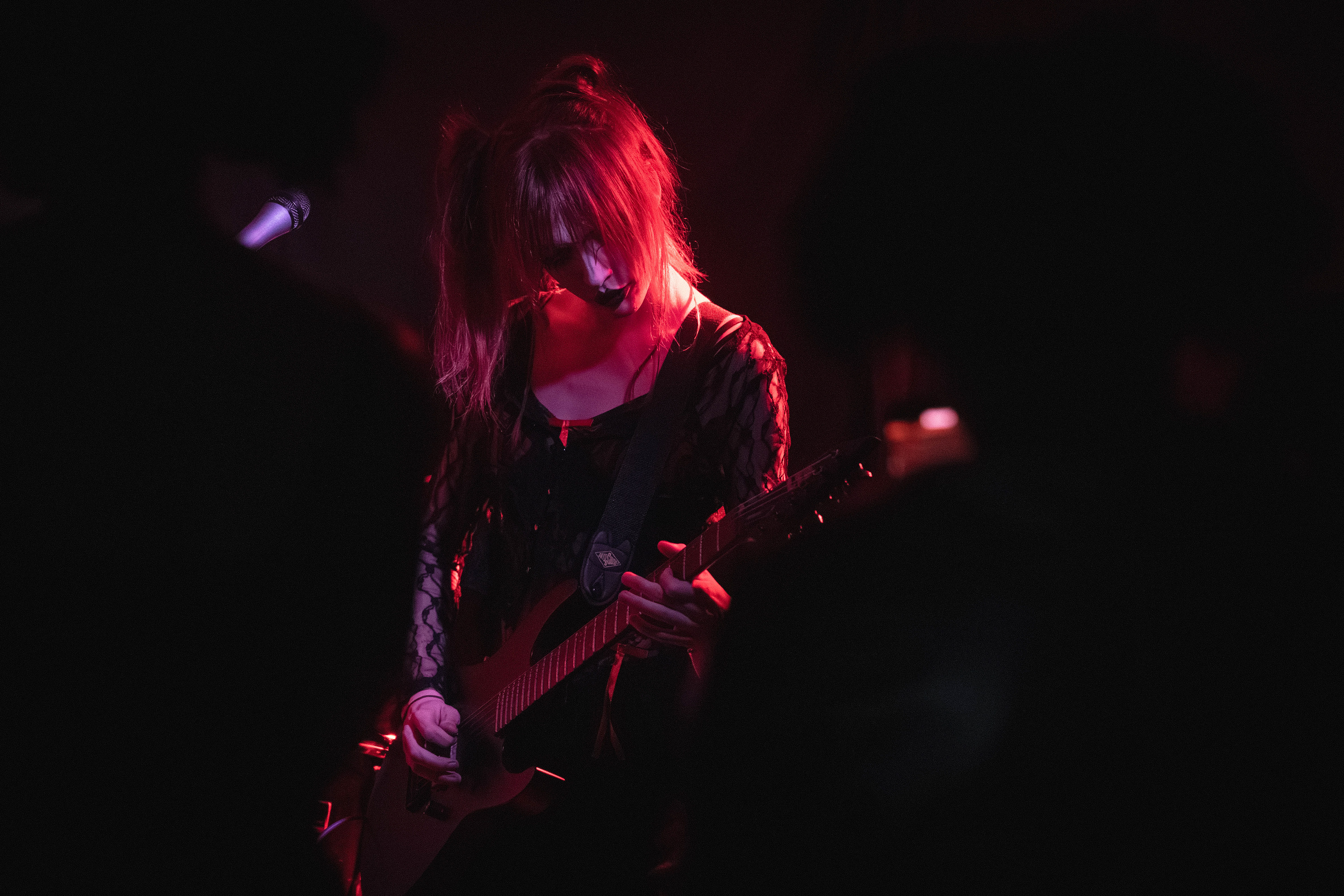
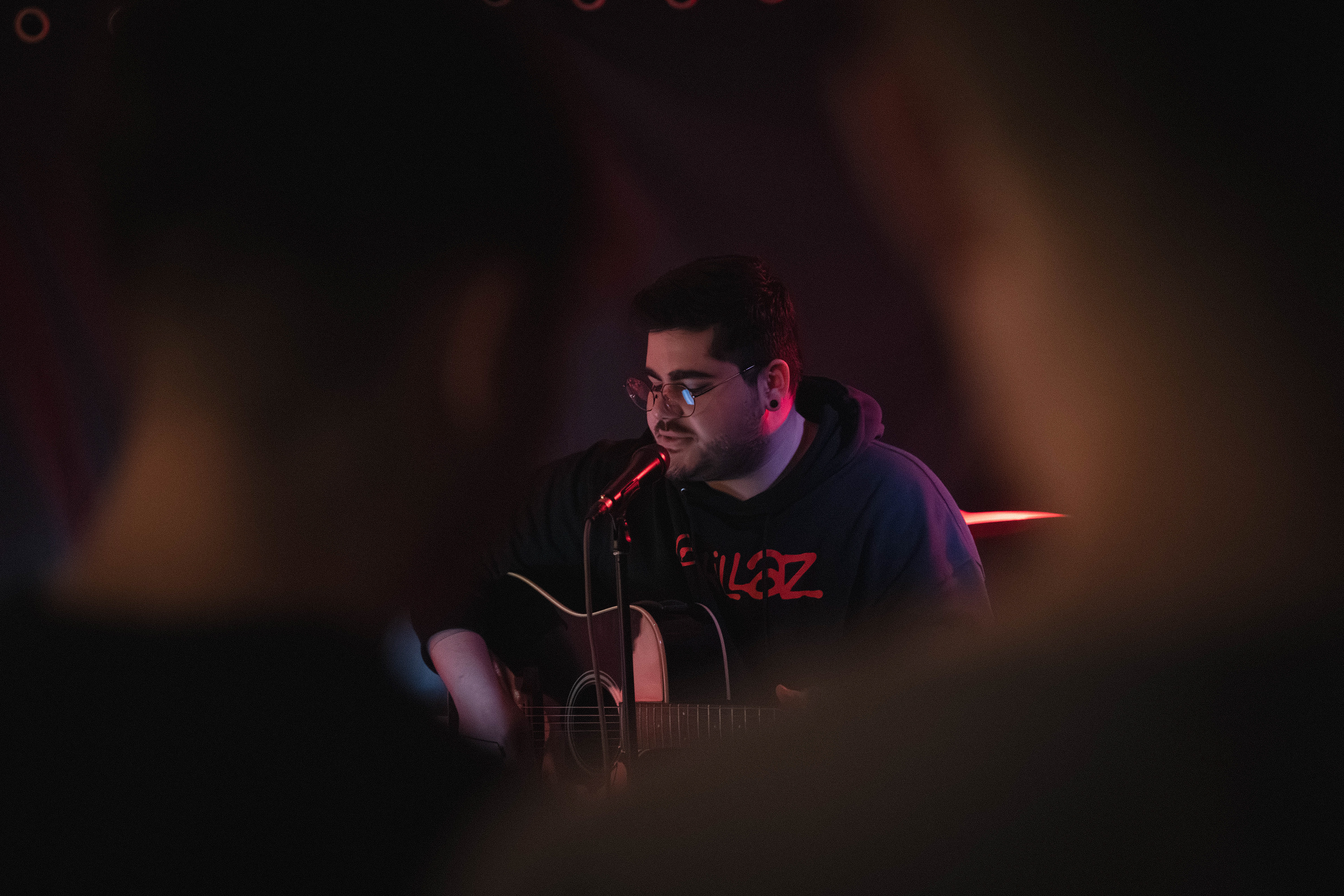
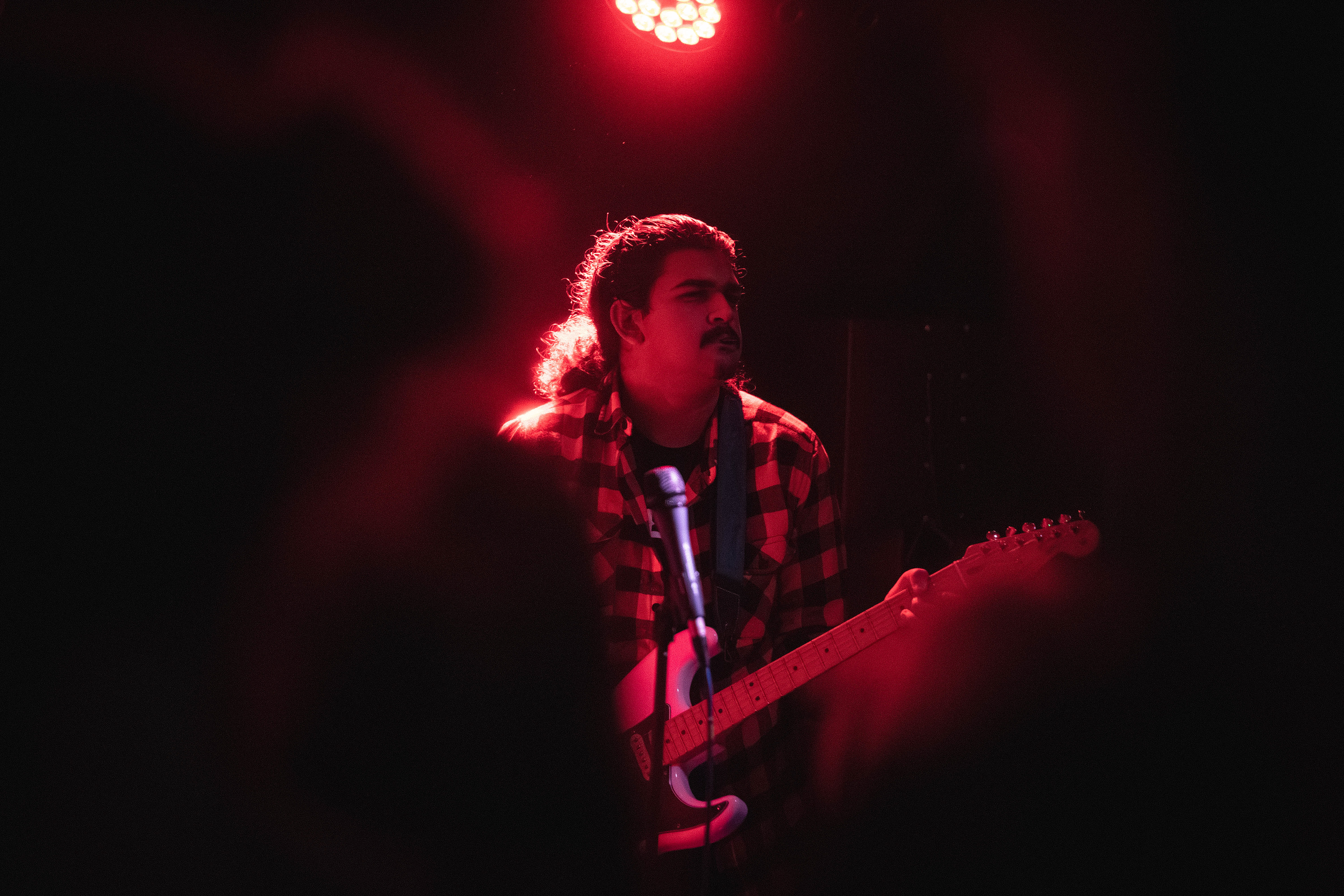
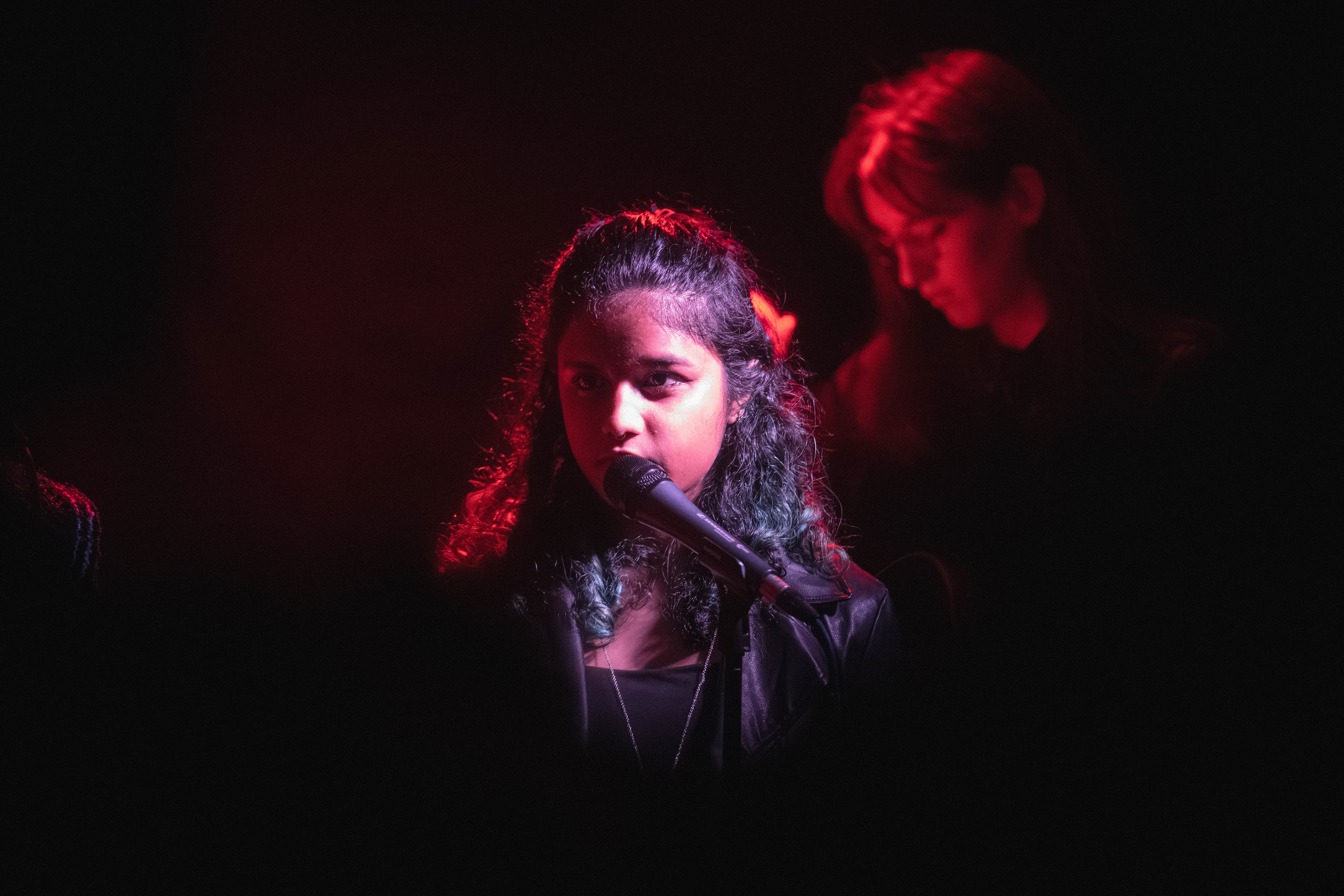
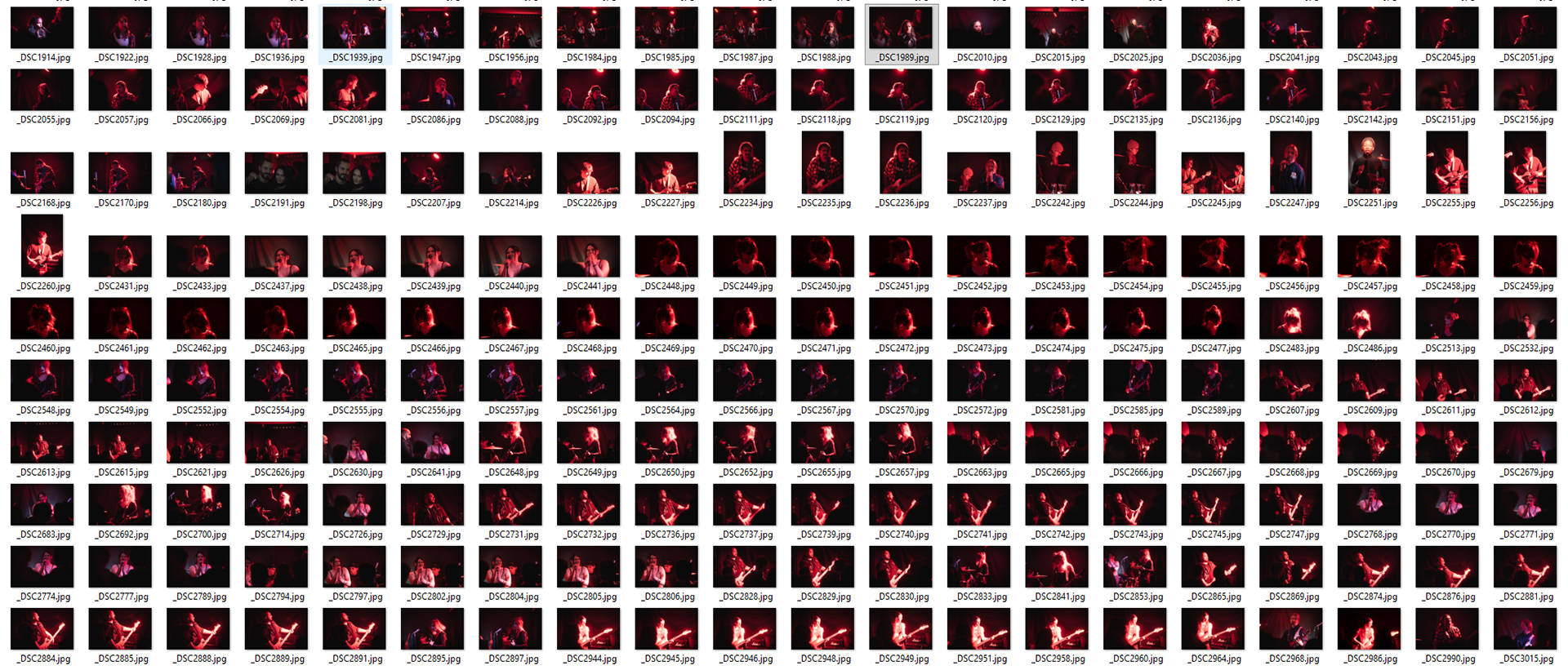
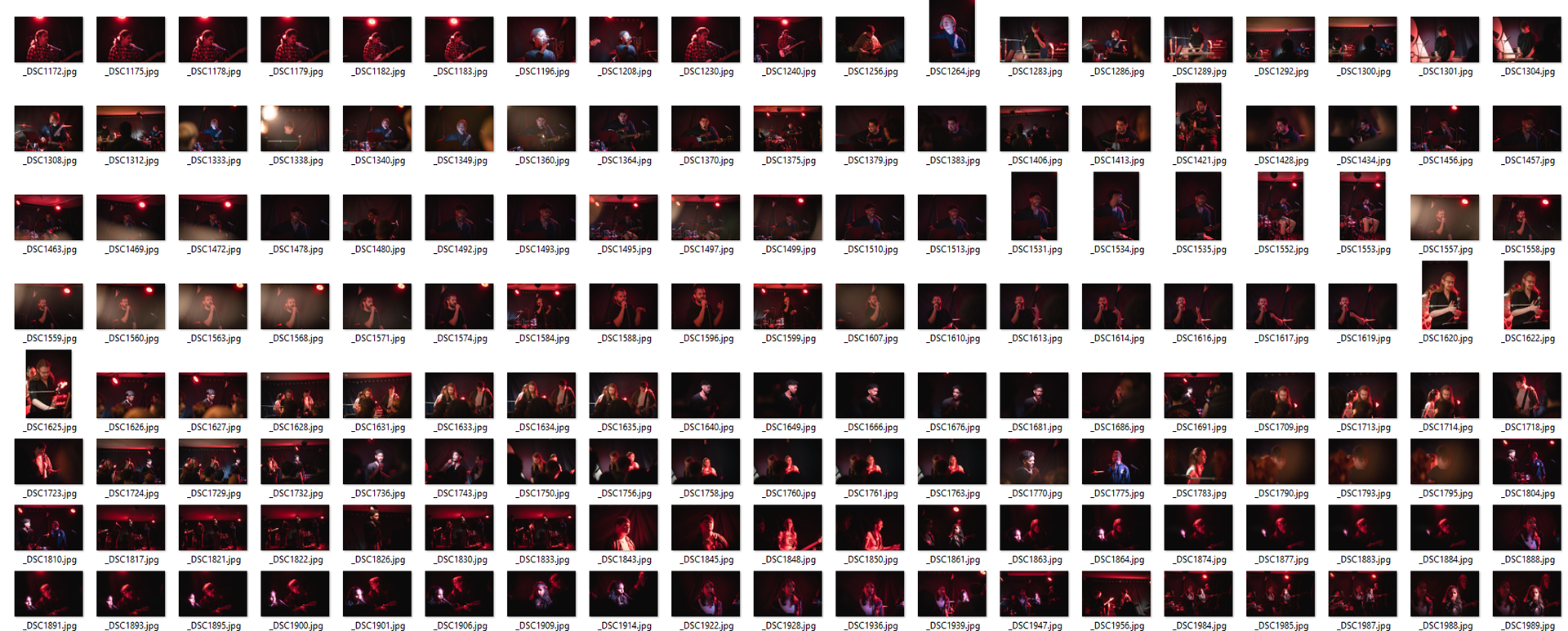
These photos were taken at the UOD music band gig and my idea with these was to focus very much on one person in each photo and use the crowd as a form of foreground depth to frame the subject. for these photos I used a 70-180f2.8 varying between f2.8 and f4 to create the most compression and depth possible. the light conditions was only red lights on the stage and the rest of the room in darkness, because of this , not being allowed to use flash, and a telephoto lens meaning I had to use high shutter speeds, I had to use tremendously high iso so all of the photos have had lightroom ai noise reduction implemented to make them usable and I think it worked out quite well, there is definitely elements of noise but for such high isos the definition and quality is still good enough for social media and small viewing. due to shooting at high continuous shooting modes to capture changing expressions, I took a lot of photos so I have included the file page of all the edited photos. I also used a black mist filter on these images to make the light have a pleasing atheistic which creates a misty look which light is shining through peoples hair and off their shiny instruments.
the first photo was taken at f4, 1/400, iso 20,000, 129mm and shows a guitarist with 2 people in the foreground framing them. this shows use of aperture and depth as the foreground has the people completely out of focus to the point where they may not be recognised, being at 129mm it also compresses the photo and makes the foreground people appear huge and very close to the subject and the telephoto aspect completely removes the guitarist from the rest of the band and focuses on them and their expression. there is a microphone camera left which brings back the idea of a band which I feel is a little too in focus and some separation would be helpful here. the background has also fallen out of focus and you can see some bokeh from a light behind camera right of the subject but the subjects face and their guitar and hands are in sharp focus so the viewer is directed to all of them. the rim light on the shoulder brings attention to their face and hair and the guitar and strap works as a leading line to see what their hands are doing. this photo could be better if the foreground person camera right was excluding all the light from the background and created a frame for them, maybe a crop could help and there is also artifactIng on that persons back which I am not sure where it is from, possibly a smudge on the filter.
the second photo was taken at f2.8, 1/400, Iso 12,800 ,88mm and shows someone singing whilst playing an acoustic guitar. this photo features different lighting conditions as the previous one ,since it was earlier in the night, the main lights were on over the crowd and it also has a blue light shining directly at the subjects face which I later asked to be turned off as it was blowing out on some of the singers with different skin tones. due to this lighting, the people in the foreground are more recognisable as people and they are clearly watching the performance the high aperture still renders them out of focus and brings the eye to the performer. the same as the previous photo, I would've liked the foreground to completely cover the stage but camera left the person is not at the edge of the photo, I could have fixed this with more zoom but I also feel like this would have changed the vibe of the image entirely, moving myself to the right and pointing the camera more left would have been the best way to go about making this image better.
the third photo was taken at f2.8, 1/400, iso 20,000, 123mm and also uses depth in the foreground but also this time in the background with the stage light being inside the photo. the photo shows another person playing the guitar and this time the focus is more on their expression as the foreground figures and the out of focus light, as well as the microphone, lead us to the subjects face and allows the viewer to see the emotion in the subjects face. depth is used to bring the viewers eye to the subject as well as keeping the idea of concert venue but the main idea is this specific guitarist and what he is doing and feeling at that current moment. I like the way the light goes through the subjects hair in this image and creates an almost white area which I feel shows the presence of the concert environment.
the fourth photo was taken at f2.8 1/400, iso 20,000 180mm and shows a singer standing at the microphone with a pure black crowd in the foreground and a guitarist in the background. this photo uses both foreground and background depth to tell the story. unfortunately on this photo I feel the highlights were blown out so by bringing the highlights slider down, I have created a flatter image but I feel the composition and use of depth of this photo works well enough for this to not be a reason to not include it. It shows the singer being backed up by the guitarist in a way, showing that she is not alone on this stage but regardless of this she is the subject of the photo and in this moment the eyes are on her. I feel like this depth adds context to the photo and allows for it to create more of a scene rather than a direct portrait.
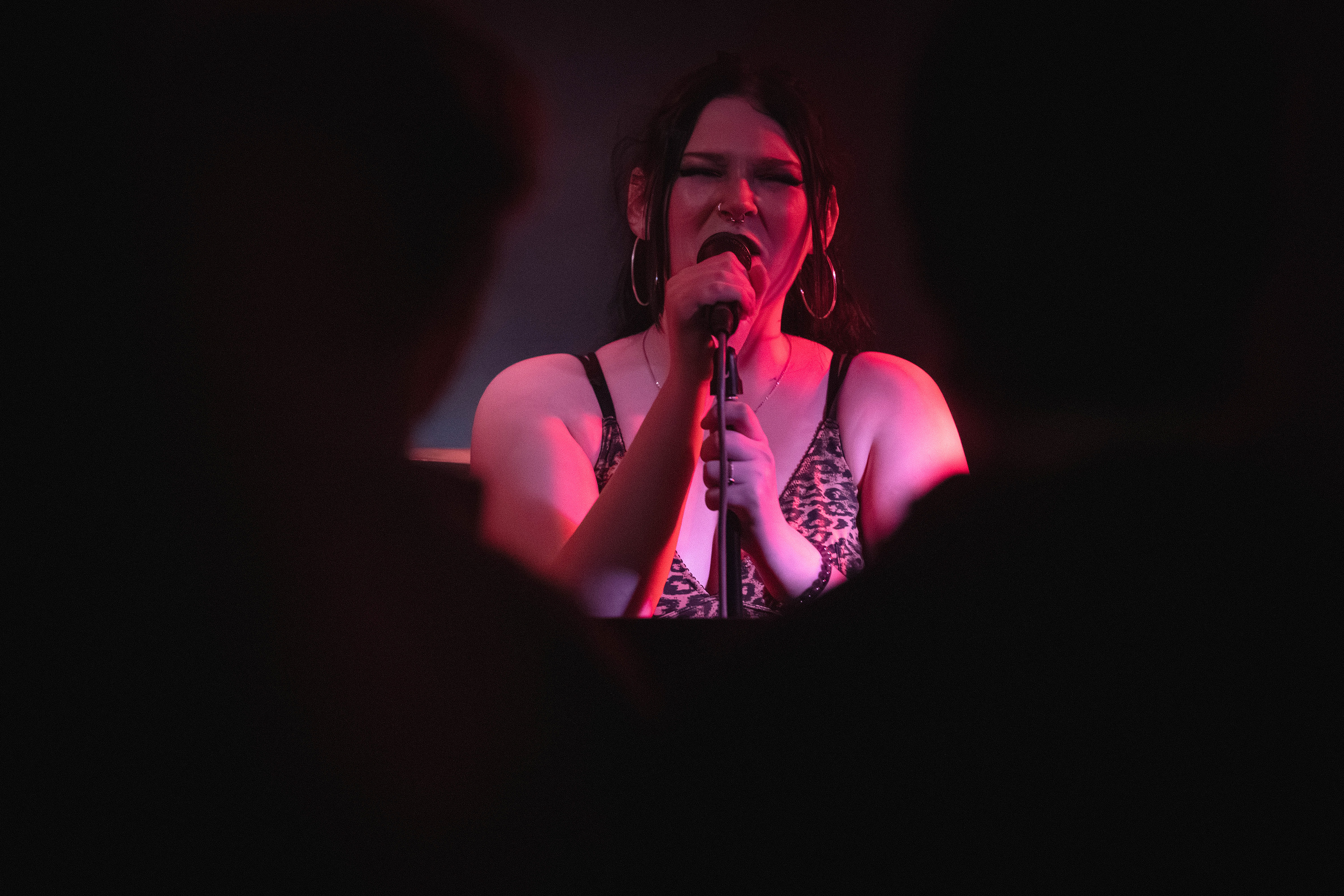
the fifth photo was taken at f4 1/400 iso 20,000 180mm and shows a singer with the crowd in the foreground framing them. this photo almost only contains the singer and excludes any other interest from the frame. the foreground figures obscure the rest of the band and allows for the viewer to purely focus on the singer who is in the middle of a note in this photo. their face has a strained and emotional look and they are holding the microphone, this could show that she is singing high or shouting at that moment. the foreground figures can be seen specifically looking at the subject by the way their heads are placed which becomes a leading figure for the viewer to focus specifically on the subject.
During this photoshoot I took 1888 photos and was left with 450 edited. this was because I was using high rate burst shooting modes to try and capture every expression on the subjects face so i had plenty to work with when I got the photos into lightroom and could make sure that everyone had enough photos of themselves that they were happy with, for example not having enough photos could mean someone could have had their eyes closed in every photo. For the sorting and editing process of these images I imported all the raws into lightroom and went through and flagged all the ones I would like to edit- looking at composition, expression, exposure, and of course depth- and once I had gone through and flagged all the images I liked I then went through and began editing one. Once I had an edit I was happy with one one image I copied the settings over to the rest and then sorted through making adjustments. this meant I could create a cohesive set of edits and it saves me time doing huge edits to each image. during this editing process I would also unflag any images I no longer wanted to edit to keep the quality of work at a standard I was sure I was happy with. I chose to use these 5 images here as I feel they demonstrated depth the best out of the rest but on the other hand I do feel I took some better images throughout the event that would not have worked for this project. a lot of the images I made throughout the shoot, including these ones, were made with the intention of being used for this project with the use of foreground and background depth and I let the event organisers and models know that I will be using them for this purpose.